|
|
|
INDUSTRIAL HERITAGE
|
|
Pei-Pu Steam Power Station
|
|
|
|
|
|
|
|
|
|
|
|
|
|
|
|
|
|
|
|
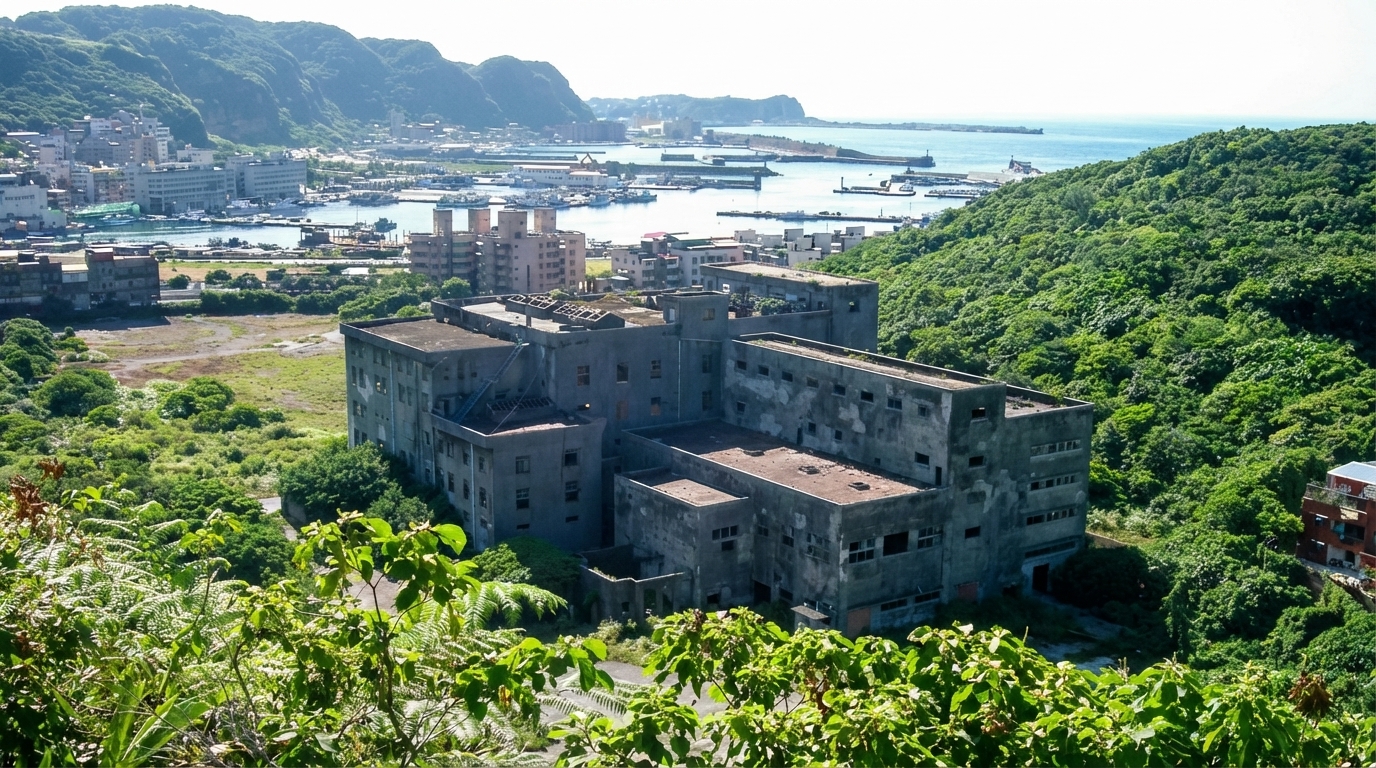
▲ Pei-Pu Steam Power Station — Data source: Dr. Shih, Tung-Wei
|
|
|
|
|
|
|
Location & Significance
Pei-Pu Steam Power Station is situated in a narrow waterway between Badouzi Island and Taiwan's main island. It was the first power station constructed on reclaimed land, and also the largest power station in Asia with the newest equipment — playing an important role in providing a steady supply of electricity for Taiwan. The power station intakes water from Changtan Harbor and discharges from Badouzi Fish Harbor, making it the first steam power station cooled by seawater.
|
|
|
|
|
|
|
Construction & Closure
The steam power station was constructed to strengthen Taiwan's power supply system, making it an important contribution to the nation's development of new industries. After halting operations in 1981, the Pei-Pu Steam Power Station lay unused and forgotten for nearly 20 years.
|
|
|
|
|
|
|
— TIMELINE OF TRANSFORMATION —
|
|
|
|
|
|
1981
Operations Halted
After decades of service, the plant ceased operations and lay dormant.
|
|
|
2001
Rebirth Planned
Plans drawn up to convert the site into the National Museum of Marine Science & Technology.
|
|
|
2004
Historic Landmark
Designated as a historic landmark by Keelung City. The site transformed into the present-day Museum.
|
|
|
|
|
|
|
|
Rebirth as a Museum
In 2001, plans were drawn up to convert Pei-Pu Steam Power Station and its surroundings into the new National Museum of Marine Science & Technology. Rising from the ashes, the plant gained a new lease of life. In 2004, it was designated as a historic landmark by Keelung City, and the site was transformed into the present-day Museum.
|
|
|
|
|
|
|
|
|
|
|
|
|
|
|